There is no such thing as a Skyline without problems. There are only Skylines whose problems you know about before you pay, and Skylines whose problems you find out about afterwards.
This checklist is built for the second kind of buyer — the one who wants to walk away from the wrong car. It’s written for people who aren’t mechanics. You don’t need tools beyond a torch and your hands, and nothing here requires you to get under a car on a jack.
Work through it in order. The early items are the ones that should end an inspection.
Before you see the car
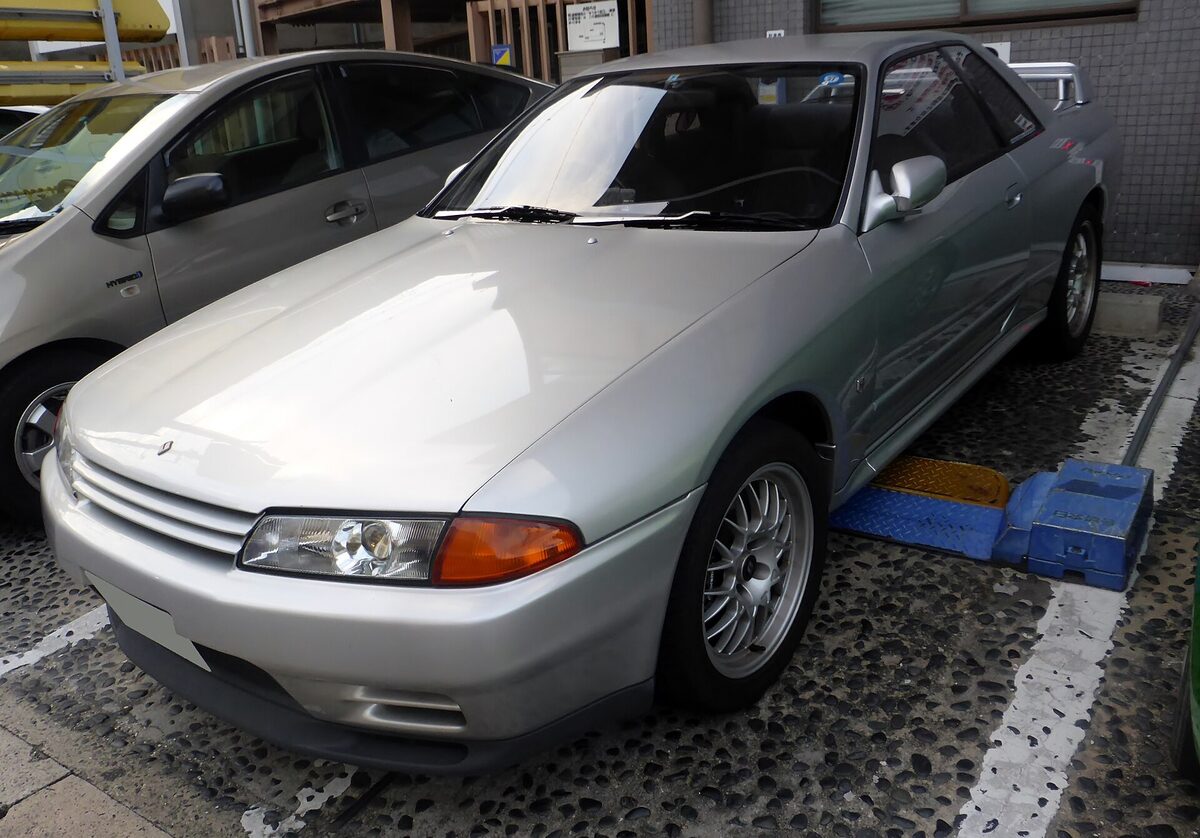
Get the chassis code and build year in writing. Ask the seller for the plate details in the engine bay, not just the ad description.
| Code | Model | Engine |
|---|---|---|
| HR32 / HCR32 | R32 GTS / GTS-T | RB20DE / RB20DET |
| BNR32 | R32 GT-R | RB26DETT |
| ECR33 | R33 GTS25t | RB25DET |
| BCNR33 | R33 GT-R | RB26DETT |
This matters for two reasons. It tells you which faults apply to this specific car, and it tells you what parts will cost you later.
Confirm the import pathway. Importing is a federal matter: vehicles 25 years or older can generally come in as a personal import, while newer performance cars go through SEVS via a registered workshop. R32s and R33s are comfortably past 25 years. Registering the car afterwards is a state or territory matter, and the two are separate hurdles — a legally imported car is not automatically a registrable one. Ask for the import approval documentation and, where applicable, the asbestos clearance.
Import and registration rules change over time. Confirm current federal requirements with the Department of Infrastructure and registration requirements with your own state or territory road authority.
Ask three questions before you drive anywhere. The answers tell you more than the photos do:
- When was the timing belt last replaced? (RB20/RB25 — see below for why this one can end the conversation)
- Has the HICAS system been repaired, deleted, or left alone?
- Do you have service records from Japan, and from Australia since import?
“I don’t know” to all three isn’t automatically a no. But it moves the car from “looks tidy” to “unknown history”, and those are different prices.
At the car: start with the body
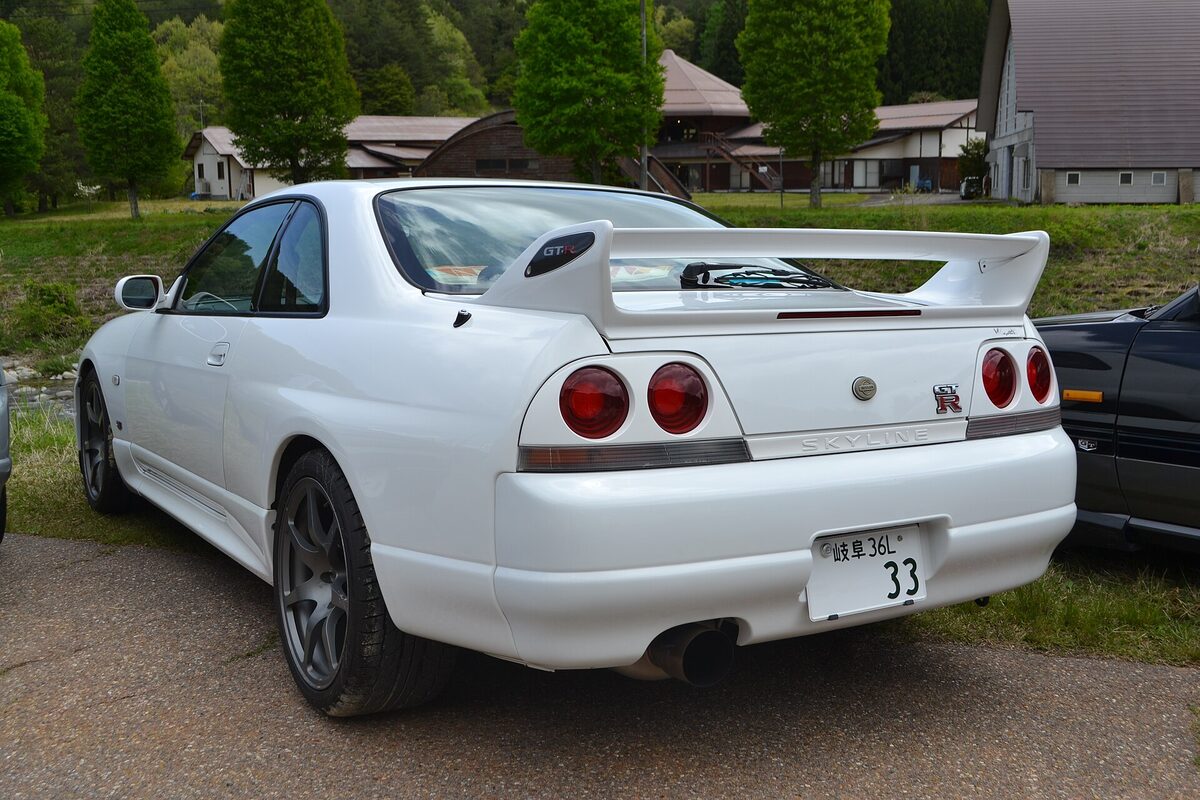
Do this first, and do it in daylight. Mechanical faults are expensive. Rust is worse. Experienced owners consistently say the same thing: a replacement engine is affordable, but replacing rotten metal escalates fast.
☐ Rear wheel arches. Run your hand along the inside lip of both. You’re feeling for bubbling, flaking, or the gritty texture of rust under paint. This is the single worst area on these cars.
☐ Behind the side skirts. If the car has them fitted, get a torch and look underneath and behind. Dirt collects there and rots the metal out of sight. A car with side skirts and no willingness to let you look behind them is telling you something.
☐ Boot floor and spare wheel well. Lift the carpet. Water sits here.
☐ Any bubbled paint, anywhere. Press gently. If it gives, the metal underneath is already gone.
☐ Panel gaps and paint texture. Mismatched gaps or orange-peel texture on one panel means repair history. Not automatically bad — ask what happened.
If you find rust that looks structural, stop here. You don’t need the rest of the checklist. Note that surface rust and structural rust can look similar to an untrained eye and cost wildly different amounts to fix — if you’re unsure which you’re looking at, that’s a reason to get a professional inspection, not a reason to guess in either direction.
Engine bay: cold start
Ask the seller not to warm the car up before you arrive. A cold start tells you things a warm engine hides. If you arrive and the engine is already warm, it may be entirely innocent — but it does mean you haven’t seen the cold start, so arrange to come back rather than proceeding without it.
☐ Watch the first thirty seconds. Listen for rattles that fade as oil pressure builds. Look for smoke — blue means oil, white that doesn’t clear means coolant.
☐ Let it idle and watch the tacho. It should settle to a steady idle. Hunting up and down between roughly 1000 and 2000 rpm is a known symptom on these cars and needs investigation.
☐ Listen at the top of the engine. A faint rapid ticking or snapping is spark escaping cracked coil boots — the most commonly reported fault on RB engines. Budget for a full set of six if you hear it.
☐ Squeeze the coolant hoses (engine cold only). Firm but pliable is right. Rock-hard or spongy means perished rubber. Look for white or coloured crust around the clamps, which marks a slow weep.
☐ Check for a timing belt service sticker. Many workshops date-stamp the engine bay. If there’s no sticker and no paperwork, assume it hasn’t been done.
☐ An odometer reading you can verify independently. Japanese auction sheets and shaken inspection records carry the mileage recorded at each point in the car’s life. Cross-checking the number on the dash against that paper trail is the only practical way to know it’s real — and on a car that has changed hands in two countries, “the seller said it’s genuine” is not verification. See how to verify the odometer on a JDM import.
☐ Oil condition. Pull the dipstick. Metallic glitter is a stop-immediately signal. Milky or mayonnaise-textured oil means coolant is getting in.
☐ Oil pressure gauge on startup. Learn what normal looks like for the model before you go. On GT-Rs specifically, the RB26 oil pump drive is a well-documented weak point, and low pressure is the warning sign that precedes catastrophic failure.
The drive
☐ Rear-end stability at speed. If the back of the car feels like it’s steering itself slightly on the highway, suspect HICAS. Every performance Skyline of this era has four-wheel steering, and with age the rear rack seals leak and the toe-control hardware wears.
☐ Warning lights. 4WD and ABS lamps illuminated can indicate a HICAS fault — or a previous owner’s botched HICAS delete. Ask which.
☐ Boost delivery. It should build smoothly and hold. Dropping off, or a metallic rattle or unusual whine from the turbo, points at the factory ceramic turbine wheel, which is known to break up with age and heat cycles. This is a four-figure repair.
☐ Temperature gauge in traffic. Sit in slow traffic deliberately if you can. An imported car built for Japan’s climate is now doing Australian summers.
☐ Clutch engagement (manual cars). Note where the pedal bites. Very high engagement means the clutch is near the end of its life.
☐ Gear selection. Every gear, including reverse. Crunching into second when cold is a common synchro complaint and worth pricing.
Paperwork
☐ Import approval documentation.
☐ Asbestos clearance where applicable — a car held at port over this is an expensive problem.
☐ Compliance and registration status. Registration requirements are set by each state and territory, not federally, so confirm what applies where you live. A HICAS lock-bar delete, for example, is a modification to a steering system, and how it’s treated at inspection differs between jurisdictions.
☐ Service records. Japanese records (shaken history) plus anything since import.
☐ An odometer reading you can verify independently. Japan’s inspection certificate records the reading at each inspection — but it carries only the current entry and the one before it. Paperwork that agrees with itself isn’t proof, and on a car that has changed hands in two countries, “the seller said it’s genuine” is not verification. See how to verify the odometer on a JDM import.
How to read what you found
Sort everything you found into three piles.
Maintenance — negotiate, don’t walk. Coil packs, hoses, spark plugs, brake pads, a tired clutch. These are known costs on a thirty-year-old car. Price them and adjust your offer.
Documentation gaps — price the risk. An unknown timing belt history on an RB20 or RB25 is the important one here. These are interference engines: if the belt breaks, the pistons hit the valves and the engine is finished. An unknown belt means you’re budgeting for the job on day one, not “at some point”. The same applies to a GT-R with no oil pump documentation. An unverified odometer belongs in this pile too. It doesn’t make the car bad, but it makes the price a guess.
Structural or catastrophic — walk away. Rust in structural areas. Metallic glitter in the oil. Coolant in the oil. A turbo that’s already rattling. These aren’t negotiating positions; they’re reasons the car is for sale.
The uncomfortable truth about buying privately
Most of the items above require you to trust what a stranger tells you about a car you’ve spent twenty minutes with. A pre-purchase inspection by a workshop that knows RB engines costs a few hundred dollars and is the best money you’ll spend in the process — particularly if you’re not mechanically experienced.
The alternative is buying through a channel where the verification has already happened: a dealer with compliant, registered stock, or a broker who inspects and grades before you commit. You pay for that, but you’re paying instead of gambling.
Either way, the principle is the same. The car worth buying is the one where someone can answer these questions with paperwork.
Bought one? Paste the model code from the export certificate into our free Japanese model code lookup to see which parts fit your exact car.
The R32/R33 Skyline series
- An Australian buyer’s introduction to the R32 and R33
- Pre-purchase inspection checklist (this page)
- Common faults and the parts that fix them
- Running costs and maintenance schedule
- Odometer fraud in Japanese used cars: what you can check
This checklist is general guidance based on widely reported owner experience. It is not a substitute for a professional pre-purchase inspection. Import, compliance and roadworthy requirements vary by state and change over time — confirm current requirements with the relevant authority before purchasing.